Portable card readers empower businesses to accept electronic payments from credit/debit cards and contactless methods anywhere, offering unparalleled flexibility and efficiency. These compact, wireless devices typically connect to a smartphone or tablet, or operate as standalone units, processing secure transactions on the go. For example, a Square Terminal provides comprehensive POS capabilities in a portable form factor, making it ideal for busy retail environments or restaurants.
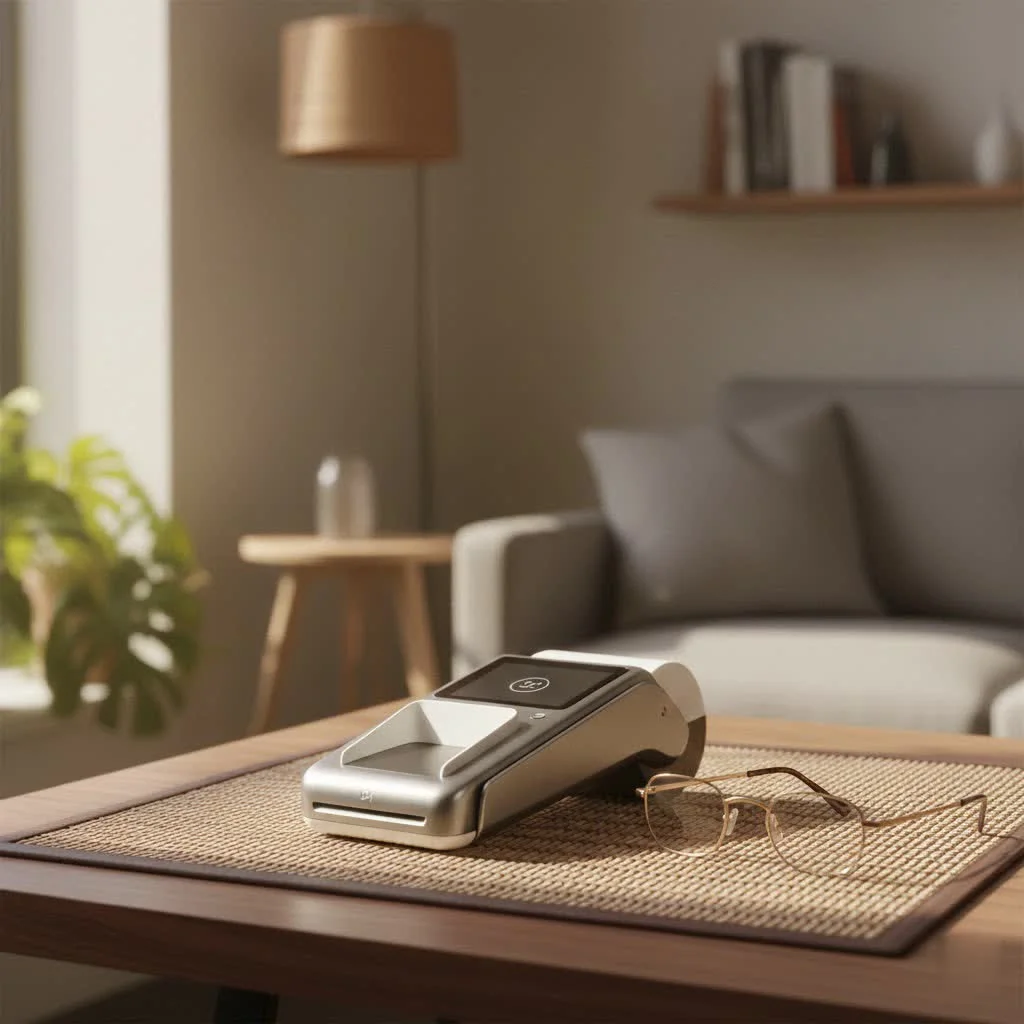 card reader processing a transaction at a market stall” style=”margin: 20px auto;width: 800px;max-width: 100%;height: auto” />
Here at Umaoc, we’ve seen firsthand how adopting portable card readers can revolutionize operations, boost customer satisfaction, and drive growthLet’s dive deep into everything you need to know about these indispensable tools.
What Exactly is a Portable Card Reader?
Simply put, a portable card reader is a small, wireless device designed to process electronic payments from credit and debit cards, as well as contactless methods, no matter where your business takes you. Unlike traditional, fixed point-of-sale (POS) systems, these devices are built for mobility. They typically connect to a smartphone, tablet, or sometimes operate as a standalone unit, using a payment application to facilitate secure transactions. Think of it as your entire checkout counter shrinking to fit in your pocket, ready to empower sales wherever your customers are.
The magic happens when a customer presents their card – whether they’re dipping an EMV chip card, tapping a contactless card or smartphone, or even swiping a magnetic stripe (though less common now). The portable card reader captures the card data and securely transmits it to the payment processor, initiating the authorization and settlement process. It’s quick, it’s efficient, and it’s surprisingly simple to integrate into your daily business flow.
Why Every Modern Business Needs a Portable Card Reader
Adopting a portable card reader isn’t just about keeping up with technology; it’s about gaining a competitive edge and meeting your customers where they are.
Increased Mobility and Flexibility
Imagine running a pop-up shop, a food truck, offering mobile beauty services, or selling crafts at a local market. With a portable card reader, your business is no longer confined to a physical storefront. You can accept payments anywhere there’s a cellular signal or Wi-Fi connection, literally taking your business on the road. This untethered approach opens up new revenue streams and allows you to capitalize on diverse selling opportunities.
Enhanced Customer Experience
In today’s consumer landscape, speed and convenience are paramount. Customers expect diverse payment options, from traditional cards to mobile wallets like Apple Pay and Google Pay. A portable card reader ensures you can cater to these preferences, making transactions swift and seamless. No more “cash only” signs turning away potential sales or fumbling for change. A smooth checkout experience translates directly into happy, returning customers.
Boosted Sales and Revenue
|
Our Picks for the Best Card Reader in 2026
As an Amazon Associate I earn from qualifying purchases.
|
||
| Num | Product | Action |
|---|---|---|
| 1 | SD Card Reader for iPhone, Memory Card Reader with USB Camera Adapter Plug and Play Trail Game Camera Viewer Supports SD and TF Card MicroSD Card Adapter for iPad No App Required |

|
| 2 | Memory Card Reader, BENFEI 4in1 USB 3.0 and USB-C to SD Micro SD MS CF Card Reader Adapter, 4 Cards Simultaneously Read and Write, Compatible with iPhone 15 Series, MacBook Pro/Air 2023, and More |
|
| 3 | USB C USB3.0 Multi Card Reader for SD, CF, Micro SD, XD, MS Cards - 7 in 1 Adapter Hub for Windows, Mac, Linux, Android |
|
| 4 | UGREEN SD Card Reader USB 3.0 Card Hub Adapter 5Gbps Read 4 Cards Simultaneously CF, CFI, TF, SDXC, SDHC, SD, MMC, Micro SDXC, Micro SD, Micro SDHC, MS, UHS-I (Black) |
|
| 5 | SAICOO Smart Card Reader DOD Military USB Common Access CAC Card Reader, Compatible with Mac OS, Win (Horizontal Version) |
|
| 6 | USB3.0 Micro SD Card Reader, 5Gbps 2-in-1 SD Card Reader to USB Adapter, Wansurs Memory Card Reader for SDXC, SDHC, MMC, RS-MMC, Micro SDXC, Micro SD, Micro SDHC and UHS-I Cards (1Pack Black) |
|
| 7 | SmartQ C368 USB 3.0 Card Reader - Plug & Play, Compatible with Apple & Windows, Supports SD, Micro SD, MS, CF Cards |
|
| 8 | Anker USB C Hub (7-in-1), with 4K HDMI, 85W Power Delivery, USB-C and 2 USB-A 5Gbps Data Ports, microSD and SD Card Reader, for MacBook Air, MacBook Pro, XPS, and More |
|
| 9 | USB C SD Card Reader for iPhone 15/16/17/Mac/iPad,Dual Card Slot Memory Card Reader Supports SD and TF Card Trail Camera Viewer SD Card Adapter Portable Micro SD Card Reader No App Plug and Play |
|
| 10 | UGREEN SD Card Reader USB C, USB 3.0 Micro SD Card Reader 2 in 1 Memory Card Reader for MicroSD SDHC SDXC Compatible with PC Computer MacBook Laptop iPad iPhone 17 16 15 Pro/Pro Max |
|
It’s a simple truth: the easier it is for customers to pay, the more likely they are to buy. By accepting a wide array of payment methods, you remove barriers to purchase, potentially increasing your average transaction value and overall sales volume. Many studies show that businesses that accept card payments experience higher revenue compared to cash-only operations.
Professionalism
Offering modern payment solutions elevates your business’s image. It signals professionalism and a commitment to customer service, building trust and credibility with your clientele. A sleek, efficient portable card reader system makes even the smallest operation look well-established and technologically savvy.
Cost-Effectiveness
Compared to traditional, often expensive, countertop POS systems, portable card readers are typically more affordable upfront and often come with more transparent, transaction-based fee structures. This makes them an excellent entry point for new businesses or those looking to upgrade their payment processing without a significant capital investment.
Types of Portable Card Readers: Finding Your Perfect Match
The market offers a variety of portable card reader types, each with its unique advantages. Understanding these can help you choose the best fit for your specific business needs.
Bluetooth Card Readers
These are perhaps the most common and accessible portable card readers. They connect wirelessly to your smartphone or tablet via Bluetooth, effectively turning your mobile device into a payment terminal. Brands like SumUp and Square offer popular Bluetooth models. They are incredibly compact, easy to set up, and often the most affordable option, making them ideal for freelancers, small vendors, and service providers who already rely on a smartphone or tablet for their business.
Plug-in Card Readers
While less prevalent now due to the rise of wireless technology, plug-in card readers directly attach to your mobile device’s audio jack or charging port (like USB-C). These were among the earliest portable solutions, offering a simple and often very low-cost way to accept card swipes. They still have a niche, especially for basic magnetic stripe transactions, but many modern payments now require chip or contactless capabilities.
Standalone Mobile POS Systems
For businesses that require more robust functionality without relying on an external smartphone, standalone mobile POS systems are the answer. These devices are all-in-one units with their own touchscreens, built-in software, and often integrated features like receipt printers and barcode scanners. Examples include the Square Terminal or Clover Flex. They offer comprehensive POS capabilities in a portable form factor, making them perfect for busy retail environments, restaurants, or any business needing advanced inventory and sales management on the go.
Contactless/NFC Card Readers
The future of payments is tap-and-go. Contactless or Near Field Communication (NFC) card readers allow customers to simply tap their card, smartphone (using Apple Pay or Google Pay), or wearable device to complete a transaction. These readers are valued for their speed, convenience, and hygienic advantages, especially in high-volume settings. Many modern Bluetooth and standalone portable card readers now include NFC technology as a standard feature, making your payment system future-proof.
Tap to Pay on Phone (SoftPOS)
This is the ultimate in portability – no extra hardware needed! “Tap to Pay” solutions leverage the NFC chip already present in many modern smartphones, allowing businesses to accept contactless payments directly on their device using a specialized app. It’s the lowest barrier to entry for accepting mobile payments, ideal for micro-merchants or situations where even a small card reader is an unnecessary extra.
Key Features to Look For When Choosing a Portable Card Reader
Selecting the right portable card reader involves considering several critical features to ensure it aligns perfectly with your business operations and customer expectations.
Payment Acceptance
The most crucial factor is ensuring the reader accepts the payment methods your customers use. Look for support for EMV chip cards, NFC/contactless payments (Apple Pay, Google Pay), and if necessary, magnetic stripe cards. Broad acceptance means no missed sales.
Device Compatibility
If you’re opting for a reader that pairs with a smartphone or tablet, verify its compatibility with your existing devices (iOS, Android, and potentially other operating systems like Windows). A versatile reader offers more flexibility if you upgrade your phone or tablet in the future.
Connectivity Options
How will your reader connect? Bluetooth is common for wireless pairing. For standalone devices, look for Wi-Fi, 4G/5G cellular data, or even USB-C for stable connections. Reliable connectivity ensures transactions are processed quickly and without interruption.
Transaction Fees & Pricing
This is where the rubber meets the road for many businesses. Understand the fee structure: are they flat rates per transaction, tiered pricing based on volume, or subscription-based models? Look for transparency and competitive rates. Always compare total costs, including any potential monthly fees, hardware costs, and additional charges for features like chargebacks or currency conversion.
Security Features
In an increasingly digital world, security cannot be overstated. Ensure the portable card reader is PCI compliant, offering end-to-end encryption and tokenization to protect sensitive customer payment data from the moment it’s captured throughout the entire transaction process. Robust fraud prevention mechanisms are also essential for peace of mind.
Battery Life
If you’re frequently on the move, a long-lasting battery is non-negotiable. Look for devices that can sustain operation for extended periods, ideally an entire workday, to avoid interruptions during peak selling times. Some devices boast hundreds of transactions on a single charge.
Software & POS Integration
A great portable card reader often comes with a powerful accompanying app or integrates with a comprehensive POS system. This software can offer invaluable tools like inventory management, sales analytics, customer tracking, invoicing capabilities, and digital receipt options. These features help streamline your operations and provide deeper insights into your business performance.
Speed & Efficiency
Customers appreciate quick transactions. Choose a reader that boasts fast processing capabilities, minimizing wait times and ensuring a smooth checkout flow, particularly for businesses with high transaction volumes.
Durability & Design
Your portable card reader will likely face the rigors of daily use, so a robust build quality is important. Consider its design – is it ergonomic, easy to hold, and small enough to fit comfortably in a pocket or small bag?
Setting Up Your Portable Card Reader: A Quick Start Guide
Getting started with a portable card reader is typically straightforward, allowing you to accept payments almost immediately.
- Unbox and Charge: Start by fully charging your new device.
- Download the App: Download the associated payment processing app from your provider (e.g., Square, SumUp) to your smartphone or tablet.
- Pair/Connect: Follow the app’s instructions to pair the reader via Bluetooth or connect it physically if it’s a plug-in model. For standalone units, simply power on and connect to Wi-Fi or cellular data.
- Complete Setup: Register your business, link your bank account, and complete any necessary verification steps within the app.
- Start Accepting Payments: Once configured, you’re ready to start processing transactions!
Expert Insights: Navigating the Portable Payment Landscape
“The future of commerce is undoubtedly mobile,” says Dr. Amelia Thorne, a veteran payment technology analyst and an advocate for small business innovation. “Portable card readers aren’t just a convenience; they’re a necessity for staying competitive. Businesses that embrace these solutions are not only meeting customer expectations but also gaining invaluable flexibility and data insights. The key is to look beyond just the transaction fee and consider the entire ecosystem – from security to software integration – to ensure a truly future-proof investment.” Her insights underscore the comprehensive approach Umaoc takes in guiding businesses through this evolving landscape.
Portable Card Readers in Action: Real-World Scenarios
The versatility of portable card readers makes them suitable for a diverse range of businesses:
- Freelancers and Consultants: Easily accept payments from clients on-site or during meetings.
- Market Stall Vendors: Process sales quickly at farmer’s markets, craft fairs, and street festivals.
- Food Trucks and Pop-Up Restaurants: Keep lines moving with fast, reliable mobile payment processing.
- Mobile Beauty/Service Providers: Accept payments conveniently at a client’s home or office.
- Pop-Up Shops: Seamlessly handle transactions for temporary retail spaces.
Frequently Asked Questions
What is the difference between a mobile card reader and a traditional POS system?
A mobile card reader is typically a compact device focused on payment acceptance, often paired with a smartphone or tablet. A traditional POS system is a larger, stationary setup, usually found at a fixed counter, offering more extensive features like detailed inventory management, employee clock-in/out, and robust reporting for a single location. Many mobile card readers, especially standalone ones, now offer significant POS functionalities.
Are portable card readers secure?
Yes, reputable portable card readers are highly secure. They employ industry-standard security measures like PCI compliance, end-to-end encryption, and tokenization to protect cardholder data, making transactions as safe as those conducted on traditional terminals.
Do I need a smartphone to use a portable card reader?
Not always. While many portable card readers connect to a smartphone or tablet via Bluetooth, there are also “standalone” portable card readers that operate independently, complete with their own screen and built-in cellular or Wi-Fi connectivity.
What are typical transaction fees for portable card readers?
Transaction fees vary by provider but generally range from 1.5% to 3.5% per transaction, often with a small fixed fee added. Some providers offer flat rates, while others have tiered pricing or subscription models. It’s crucial to compare these rates based on your projected sales volume.
Can portable card readers print receipts?
Many portable card readers, especially standalone models or those integrated into mobile POS systems, have built-in receipt printers. For simpler Bluetooth readers, the accompanying app typically offers options to send digital receipts via email or text message. Portable Bluetooth printers can also be paired with many systems.
How long does the battery last on a portable card reader?
Battery life varies significantly by model and usage. Most reputable portable card readers are designed to last for a full day of typical transactions, often supporting hundreds of payments on a single charge. Always check the manufacturer’s specifications.
What payment methods do portable card readers accept?
Modern portable card readers generally accept EMV chip cards (insert/dip), contactless payments (tap via NFC like Apple Pay, Google Pay, or contactless cards), and in some cases, magnetic stripe swipes. They are designed to accommodate the most popular and secure payment methods.
Conclusion
The portable card reader is more than just a gadget; it’s a gateway to new possibilities for businesses of every scale. By embracing these innovative tools, you unlock unprecedented mobility, enhance your customer’s experience, and position your brand for sustained growth in a cashless economy. The market trends unequivocally point towards an increasing reliance on mobile and flexible payment solutions, and a portable card reader ensures you’re not just ready for the future, but thriving in it.
At Umaoc, we are dedicated to providing you with the knowledge and insights needed to navigate the changing world of payment technology. Choose your portable card reader wisely, set it up confidently, and watch your business flourish wherever your journey takes you.
Set Up Your Portable Card Reader
A quick guide to getting your portable card reader ready to accept payments.
Begin by carefully unboxing your new portable card reader. Ensure it is fully charged before proceeding with the setup. A full charge will prevent interruptions during the initial configuration.
Download the associated payment processing app from your provider, such as Square or SumUp, onto your smartphone or tablet. This app is essential for managing transactions and settings.
Follow the app's instructions to pair the reader via Bluetooth if it's a wireless model, or connect it physically if it's a plug-in type. For standalone units, simply power on and connect to Wi-Fi or cellular data as prompted.
Within the app, register your business, link your bank account for settlements, and complete any necessary verification steps. This ensures your transactions are properly processed and funds are deposited.
Once all configuration steps are complete and verified, your portable card reader is ready for use. You can now begin processing transactions and accepting payments from your customers.
Get our weekly buyer guide
Practical specs, not advice. Unsubscribe anytime.

I got a basic portable card reader for my pop-up bakery stand. It’s good for taking credit cards, which is essential. However, I was hoping for something that felt a bit more robust. The battery life on my particular unit isn’t as long as I’d like, meaning I have to remember to charge it more frequently than I anticipated. It does the job, but I might look into a standalone unit next time for better reliability.
The flexibility of these devices is awesome. I run a mobile dog grooming service, and being able to process payments right after a groom, wherever I am, is super convenient. I opted for a model that connects to my smartphone, and it works great most of the time. My only minor gripe is that sometimes the Bluetooth connection can be a bit finicky in certain areas, but it usually resolves itself quickly.
As a freelance photographer, I’m always on the go, meeting clients at different locations. Having a portable card reader has made invoicing and payment collection incredibly easy. It integrates seamlessly with my existing accounting software, and the transaction fees are very reasonable. It’s definitely boosted my professional image and reduced the hassle of chasing payments.
I’ve been using a portable card reader for my small craft business for about six months now, and it’s been a game-changer. Before, I was limited to cash or online payments, which really cut into my sales at markets. The ability to accept contactless payments with my Square Terminal has made transactions so much smoother and faster. My customers love the convenience, and I’ve definitely seen an uptick in impulse buys.