In today’s fast-paced business world, customer expectations for payment convenience and speed are higher than ever. From the corner coffee shop to bustling retail giants, the humble credit card reader has transformed from a simple payment tool into a vital cog in the machinery of commerce. But with so many options and technologies evolving at lightning speed, how do you choose the right one, and more importantly, how do you ensure your transactions are secure?
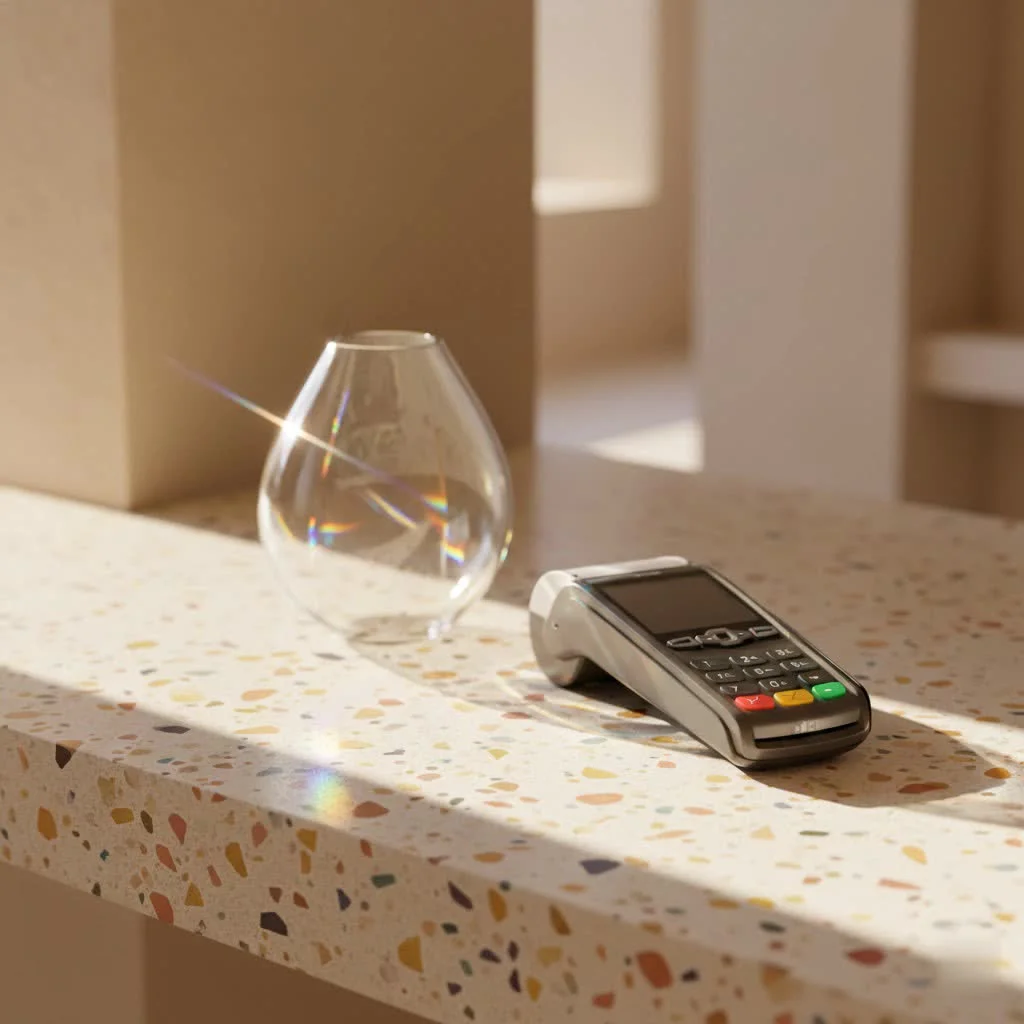
At Umaoc.com, with over 15 years of hands-on experience in the card reader industry, we understand these complexities. Our mission is to demystify the technical jargon and empower you with the knowledge to make informed decisions for your business. Let’s dive deep into the fascinating world of credit card readers, ensuring you’re ready for secure, efficient, and future-proof payment processing.
The Heart of Commerce: What is a Credit Card Reader?
At its core, a credit card reader is an electronic device designed to capture payment data from a customer’s credit or debit card and securely transmit it for authorization. It’s the essential bridge between a customer’s intention to buy and the successful completion of a sale, playing a pivotal role in enabling electronic transactions.
Beyond the Swipe: How Credit Card Readers Really Work
Ever wonder what magic happens in those few seconds when a customer taps, dips, or swipes their card? It’s a precisely orchestrated five-stage process that ensures your money moves securely and efficiently.
- Card Interaction: This is where the reader makes its first contact. Depending on the card type, it captures data via a magnetic stripe (swipe), an EMV chip (dip), or Near Field Communication (NFC) antenna (tap).
- Data Encryption: Almost instantly, the reader or the card’s chip encrypts this sensitive payment data. This step is crucial, turning raw card numbers into an unreadable, secure code, safeguarding it from potential eavesdroppers.
- Network Transmission: The encrypted data then travels through your internet connection—be it Wi-Fi, Ethernet, or cellular—to your chosen payment processor. This transmission occurs over secure channels, acting like a digital armored truck for your data.
- Authorization Request: The payment processor forwards the encrypted data to the relevant card network (like Visa or Mastercard), which then routes the request to the customer’s issuing bank. The bank quickly verifies funds, checks for fraud, and sends an approval or decline message back through the network chain.
- Transaction Completion: Finally, the authorization message returns to your credit card reader. An approval means the transaction is complete, funds are on their way to your merchant account, and a receipt can be printed (or emailed). A decline means the payment was unsuccessful, and alternative methods may be needed.
Behind this seamless process are several key players: the cardholder (your customer), the merchant (your business), the payment terminal/card reader, the payment gateway and processor (companies like Square or Stripe handling the data behind the scenes), the acquiring bank (your bank), the card network, and the issuing bank (your customer’s bank). They all work in concert to ensure every transaction is secure and completed in milliseconds.
A Spectrum of Solutions: Types of Credit Card Readers
|
Our Picks for the Best Card Reader in 2026
As an Amazon Associate I earn from qualifying purchases.
|
||
| Num | Product | Action |
|---|---|---|
| 1 | SD Card Reader for iPhone, Memory Card Reader with USB Camera Adapter Plug and Play Trail Game Camera Viewer Supports SD and TF Card MicroSD Card Adapter for iPad No App Required |

|
| 2 | USB C USB3.0 Multi Card Reader for SD, CF, Micro SD, XD, MS Cards - 7 in 1 Adapter Hub for Windows, Mac, Linux, Android |
|
| 3 | Memory Card Reader, BENFEI 4in1 USB 3.0 and USB-C to SD Micro SD MS CF Card Reader Adapter, 4 Cards Simultaneously Read and Write, Compatible with iPhone 15 Series, MacBook Pro/Air 2023, and More |
|
| 4 | Anker USB C Hub (7-in-1), with 4K HDMI, 85W Power Delivery, USB-C and 2 USB-A 5Gbps Data Ports, microSD and SD Card Reader, for MacBook Air, MacBook Pro, XPS, and More |
|
| 5 | UGREEN SD Card Reader USB C, USB 3.0 Micro SD Card Reader 2 in 1 Memory Card Reader for MicroSD SDHC SDXC Compatible with PC Computer MacBook Laptop iPad iPhone 17 16 15 Pro/Pro Max |
|
| 6 | SAICOO Smart Card Reader DOD Military USB Common Access CAC Card Reader, Compatible with Mac OS, Win (Horizontal Version) |
|
| 7 | USB C SD Card Reader for iPhone 15/16/17/Mac/iPad,Dual Card Slot Memory Card Reader Supports SD and TF Card Trail Camera Viewer SD Card Adapter Portable Micro SD Card Reader No App Plug and Play |
|
| 8 | SmartQ C368 USB 3.0 Card Reader - Plug & Play, Compatible with Apple & Windows, Supports SD, Micro SD, MS, CF Cards |
|
| 9 | UGREEN SD Card Reader USB 3.0 Card Hub Adapter 5Gbps Read 4 Cards Simultaneously CF, CFI, TF, SDXC, SDHC, SD, MMC, Micro SDXC, Micro SD, Micro SDHC, MS, UHS-I (Black) |
|
| 10 | USB3.0 Micro SD Card Reader, 5Gbps 2-in-1 SD Card Reader to USB Adapter, Wansurs Memory Card Reader for SDXC, SDHC, MMC, RS-MMC, Micro SDXC, Micro SD, Micro SDHC and UHS-I Cards (1Pack Black) |
|
The technology behind card readers has evolved dramatically, moving beyond simple magnetic swipes to sophisticated, secure methods. Understanding these types is key to choosing the best fit for your business.
Magnetic Stripe (Magstripe) Readers: The Tried and True
These are the classic readers where customers swipe the magnetic strip on the back of their card. Introduced in the 1960s, magstripe cards store static data like your card number and expiration date. They’re typically simple, affordable, and still widely compatible, making them a common sight as backup solutions or in low-volume scenarios. However, their static data makes them vulnerable to skimming and cloning, offering the lowest level of security compared to newer technologies. While some businesses still use them, relying solely on magstripe readers today exposes you to significant fraud risks.
EMV Chip Card Readers: The Global Standard for Security
To combat the vulnerabilities of magstripe cards, EMV (Europay, Mastercard, and Visa) chip technology emerged in the 1990s. These readers require customers to “dip” their chip-enabled card into a slot. The embedded microchip then communicates securely with the reader, generating a unique, dynamic cryptogram for each transaction. This means that even if a fraudster captures the transaction data, it’s virtually useless for subsequent transactions. This technology has become the global standard, significantly reducing card-present fraud and typically requiring a PIN or signature for verification. While slightly slower than a quick swipe, the enhanced security is a worthwhile trade-off.
Contactless (NFC) Readers: The Future of Fast Payments
Building on EMV chip technology, contactless payments utilize Near Field Communication (NFC) to offer the fastest and most convenient transaction experience. Customers simply “tap” their EMV-enabled card or mobile device (like Apple Pay, Google Pay, or Samsung Pay) near the reader. The reader emits a radio signal that powers the card’s chip and antenna, transmitting encrypted payment information. A key security feature here is tokenization, where the actual card number is replaced with a unique, one-time-use token, further enhancing security. Mobile wallets often add an extra layer of protection through biometric (fingerprint or facial recognition) or passcode authentication. Contactless payments are rapidly gaining popularity for their unparalleled speed, convenience, and robust security, making them ideal for quick-service environments and modern retail.
“The shift towards multi-method card readers isn’t just a trend; it’s a necessity for businesses aiming to cater to diverse customer preferences while maintaining the highest levels of security. You simply can’t afford to turn away a customer because you can’t accept their preferred payment,” advises Dr. Anya Sharma, lead payment systems architect at Umaoc.com.
Fortifying Your Finances: Essential Security Features in Modern Readers
When it comes to handling sensitive financial data, security isn’t just a feature; it’s a fundamental requirement. Modern credit card readers are engineered with multiple layers of protection to safeguard both your business and your customers.
- PCI DSS Compliance: This is the Payment Card Industry Data Security Standard, a set of rigorous requirements for all entities that store, process, or transmit credit card data. A compliant reader ensures that your hardware meets these critical security benchmarks.
- End-to-End & Point-to-Point Encryption (E2EE/P2PE): These are powerhouse encryption methods. E2EE ensures that cardholder data is encrypted from the moment it enters the reader until it reaches the secure payment processor. P2PE goes a step further, encrypting data directly at the point of entry and keeping it encrypted until it’s safely decrypted within a secure hardware security module (HSM) at the payment gateway. This prevents sensitive information from ever being exposed in your POS system or on the device itself.
- Tokenization: While handled by the payment system rather than the reader directly, tokenization is a critical security layer. It replaces the customer’s actual Primary Account Number (PAN) with a unique, randomly generated token. This token is useless if intercepted by fraudsters, as it cannot be reverse-engineered to reveal the original card details.
- Biometric/Passcode Authentication: For mobile wallet payments, devices leverage biometric (like Touch ID or Face ID) or passcode authentication. This means even if someone gets hold of a customer’s phone, they can’t complete a transaction without their unique biological identifier or password.
- Tamper-Resistant Hardware & Firmware Updates: High-quality readers are built with physical safeguards to prevent tampering. Additionally, manufacturers regularly release firmware updates to patch security vulnerabilities and ensure compliance with the latest standards, often allowing for remote management and automatic updates to keep your system robust without manual intervention.
It’s important to remember that certified readers never store full card data. They encrypt data immediately upon interaction, ensuring sensitive information never resides unprotected on the device. Only masked data (e.g., the last four digits) and secure tokens are retained for receipts or refunds.
Choosing Your Payment Partner: Key Considerations for Businesses
Selecting the right credit card reader is a strategic decision that can impact your operational efficiency, customer satisfaction, and bottom line. Here’s what seasoned professionals at Umaoc.com recommend you consider:
- Compatibility with Your Payment Solution: This is paramount. Always choose readers officially supported by your payment platform (e.g., Square, Clover, Stripe). A reader might be technically functional on a device, but if your payment processor doesn’t recognize or allow it, it won’t work for processing payments.
- Supported Payment Methods: Ensure the reader supports all the payment types your customers use or prefer – magstripe, EMV chip, NFC contactless, and even alternative methods like QR codes, gift cards, or Buy Now, Pay Later (BNPL) options. The more flexibility, the broader your customer base.
- Portability & Design: Do you operate from a fixed counter, or do you need to take payments on the go?
- Fixed Counter Setup: Countertop terminals with Ethernet or Wi-Fi provide stable connectivity for high-volume checkouts.
- Mobile/Tableside Use: Bluetooth-enabled or cellular-capable readers pair with phones/tablets, perfect for pop-ups, food trucks, or tableside service.
- Connectivity Options: Modern readers offer versatile connectivity via Wi-Fi, Bluetooth, cellular (4G/LTE), and USB. Choose options that provide consistent uptime and flexibility for your specific business environment.
- Ease of Use & Reliability: A credit card reader should be intuitive for both your staff and customers. Look for quick setup, a clear user interface, long battery life (for mobile units), seamless reconnection, and positive long-term user reviews. Testing a reader if possible can save headaches down the line.
- Cost & Fees: Understand the full cost picture. This includes the upfront hardware cost (which can range from free with some providers to hundreds of dollars) and, crucially, the processing fees charged per transaction by your payment processor. These fees often include interchange fees and network fees. Opt for transparent pricing to avoid surprises.
Beyond Transactions: Integrating with Your POS System
While a credit card reader is indispensable for accepting payments, for most businesses, it’s just one component of a larger ecosystem: the Point of Sale (POS) system. A full POS system integrates hardware (like your card reader, receipt printer, and cash drawer) with powerful software that goes far beyond simply processing sales.
Integrating your credit card reader with a comprehensive POS system unlocks a wealth of benefits:
- Automated Inventory Management: Sales automatically update stock levels, trigger low-stock alerts, and streamline reordering.
- Detailed Reporting & Analytics: Gain insights into sales trends, popular products, busiest times, and overall business performance.
- Customer Relationship Management (CRM): Track customer purchase history, manage loyalty programs, and personalize marketing efforts.
- Omnichannel Operations: For businesses with both online and physical stores, a strong POS can centralize data, ensuring consistent pricing, inventory, and customer experiences across all channels.
- Employee Management: Track work hours, manage shifts, and simplify payroll.
In essence, while a standalone card reader is sufficient for very low transaction volumes or temporary setups, a full POS system transforms your checkout into a unified sales, inventory, and analytics engine, essential for reducing errors, optimizing fees, and delivering a seamless experience across every customer touchpoint as your business grows.
Frequently Asked Questions (FAQs)
Do credit card readers store data?
No, modern, certified credit card readers are designed not to store full credit card data. They encrypt the data immediately upon interaction (swipe, dip, or tap) and transmit it securely to the payment processor. Only masked data (like the last four digits) or secure tokens are retained for operational purposes like receipts or refunds.
Are all credit card readers secure?
While the industry strives for high security, not all credit card readers offer the same level of protection. Modern readers adhering to PCI PTS (Payment Card Industry PIN Transaction Security) and EMVCo standards, offering end-to-end encryption (E2EE) and tokenization, are highly secure. It’s crucial to purchase readers from trusted, certified providers and keep their software and firmware updated to ensure optimal security.
Do I need Wi-Fi to use a credit card reader?
Most modern credit card readers and POS terminals require an internet connection (Wi-Fi, cellular data, or Ethernet) to authorize transactions in real-time. However, some advanced payment solutions and readers offer an “offline mode” where transactions can be securely stored locally and uploaded for processing once an internet connection is re-established. Without any connection, these offline transactions cannot be finalized until the reader is back online.
What are the main types of credit card readers?
The three main types are:
- Magnetic Stripe (Magstripe) Readers: For swiping cards with a magnetic stripe, offering basic functionality but lower security.
- EMV Chip Card Readers: For inserting cards with an embedded chip, providing enhanced security through dynamic transaction codes.
- Contactless (NFC) Readers: For tapping cards or mobile devices, offering the fastest and most secure transactions through NFC technology and tokenization. Many modern readers combine all three capabilities.
Do credit card readers take fees?
The card reader hardware itself generally does not “take” fees directly. However, the payment processing service you use with the reader (e.g., Stripe, Square, Adyen) will charge fees. These typically include per-transaction fees (which cover interchange fees, network fees, and processor markups) and sometimes monthly service fees. These fees can vary based on card type, transaction method, and your chosen processor.
Final Thoughts: Unlocking Efficiency and Scalability with the Right Reader
Understanding the intricacies of credit card readers — from how they process data to their advanced security features and integration capabilities — is no longer optional; it’s fundamental to modern business success. By choosing a reader that aligns with your operational needs, prioritizes security, and integrates seamlessly with your overall POS system, you’re not just accepting payments; you’re investing in streamlined operations, enhanced customer trust, and robust growth.
At Umaoc.com, we believe that empowering you with expert knowledge is the first step towards building a payment infrastructure that’s not just functional, but truly transformative. Make an informed choice, and set your business up for unparalleled success in the evolving landscape of digital payments.
Get our weekly buyer guide
Practical specs, not advice. Unsubscribe anytime.